
Book review.
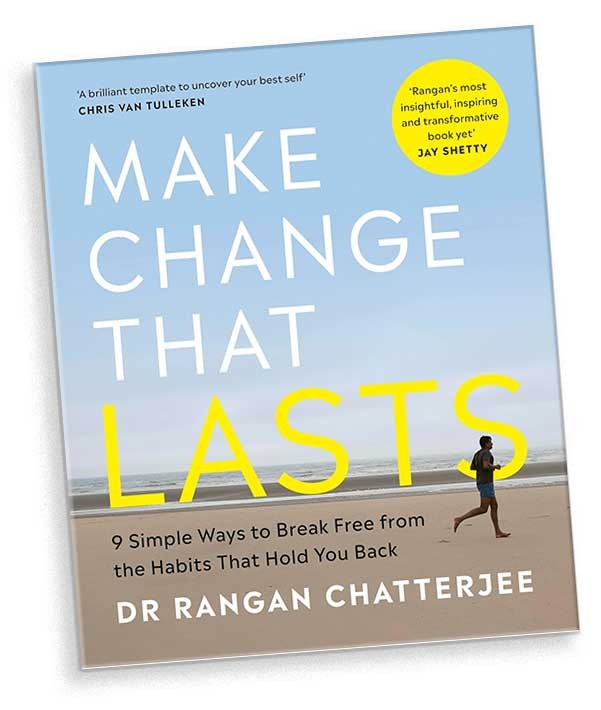
Make Change That Lasts - By Dr Rangan Chaterjee
Page 16 introduces the idea of 'Minimal Reliance' - great for explaining why we can sometimes feel 'out of control', anxious and dependent, rather than independent.
'If you follow the advice in these pages, you will achieve a state of freedom and inner power I call 'Minimal Reliance' (Dr Rangan Chatterjee).
My question would be: what are you reliant upon in order for you to feel 'in control'?
You can buy it here.
Book Review
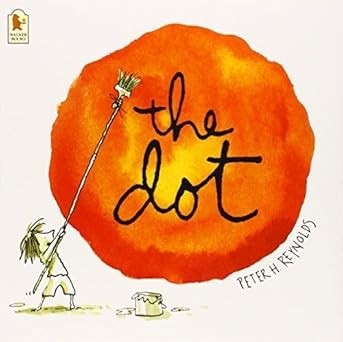
The Dot - By Peter Reynolds
This book changed the way I taught in the classroom and how I parented at home.
It tells the story beautifully of a little girl who doesn't think she's 'good enough' - one of the most common (in fact THE most common) limiting beliefs that can stop our thinking and send us off track.
Perfect for demonstrating how to replace such limiting beliefs with more empowering ones.
You can buy it here
Podcast to share
There are 3 very powerful messages to teach children and young adults from this podcast.
1) Of all the bits of advice Steve Peters could choose to give, he is asked to select one. His answer was: Know who you are;
2) When faced with someone struggling to manage their emotions - his re-assuring wisdom of 'it is normal to feel this way, given this situation';
3) A helpful one liner when we are feeling uneasy - ask 'Does it really matter at the end of the day?'
Special Needs or Ordinary Needs?
Before we diagnose ourselves with special needs (I prefer 'specific' needs), it's really powerful to look down these two lists and assess whether our ORDINARY human needs are being met first.
It is also important to note that we might meet these needs...but in an unhelpful way (for example - sometimes we try to control others and situations in order to meet our need for certainty, or we eat too much when we are bored because we need variety).
How do you meet your needs? In healthy ways or unhealthy ways?
Human Needs: (Source: Tony Robbins)
- Certainty;
- Variety;
- Significance;
- Love and connection;
- Contribution;
- Growth.
Ordinary Needs: (Source: Inclusive Solutions)
- Being somebody;
- Contributing by sharing gifts and capacities;
- Knowing people and having relationships;
- Having choice and control;
- Sharing ordinary places - being present in local spaces and having a valued role there.